
KEESUN Improves Antenna Manufacturing and Quality Control Processes
-
admin
- 29th September 2026
KEESUN continues to improve its antenna manufacturing and quality control processes as part of its daily production work. As demand for wireless communication products continues to grow, customers are paying more attention not only to antenna specifications, but also to production consistency, testing procedures and long-term supply capability.
KEESUN is an RF antenna manufacturer providing standard and customized antenna products for different wireless communication applications. The company’s product range includes omnidirectional antennas, directional antennas, fiberglass antennas, rubber whip antennas, panel antennas, FPV antennas, GPS and GNSS antennas, PCB antennas and other RF antenna solutions. KEESUN also manufactures RF cables, coaxial cable assemblies and RF connectors for different equipment and applications.
For an antenna manufacturer, product quality is closely related to many stages of production. Material selection, component inspection, assembly, RF testing, finished product inspection and packaging all have an effect on the final product. For this reason, KEESUN continues to focus on process control and inspection throughout the manufacturing process.
Production Starts with Material and Component Inspection
Quality control begins before the antenna enters the assembly line.
An RF antenna is normally made up of several components, including antenna elements, PCB or internal circuits, coaxial cables, RF connectors, housings and mechanical parts. Different antenna models may use different materials and component specifications, depending on their operating frequency, structure and application.
Before production, the required materials and components are checked according to the product specifications. This includes confirming the component model, dimensions, connector type, cable specifications and general appearance.
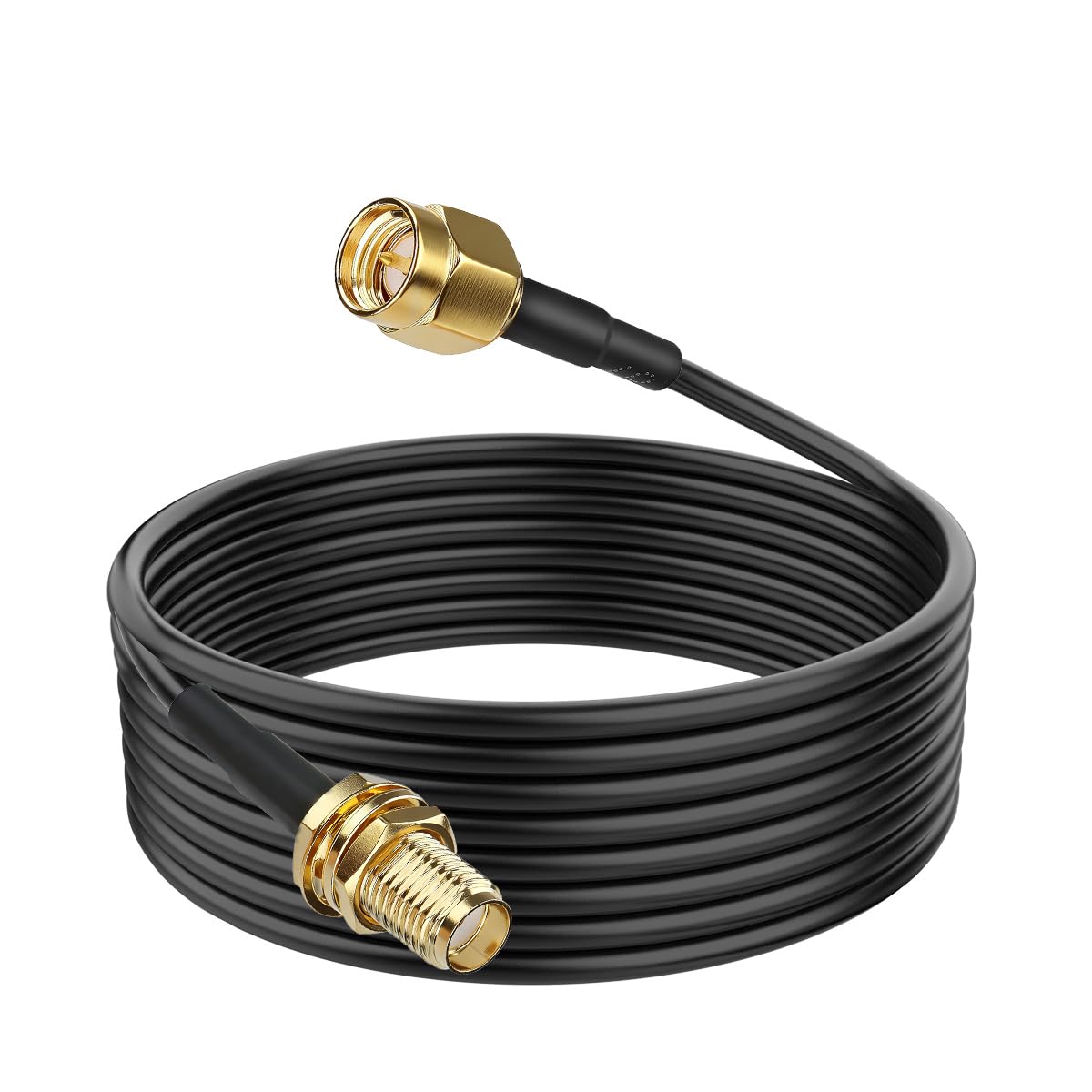
RF connectors are an important part of many antenna products. KEESUN works with different connector configurations, including SMA, N-type, MMCX, IPEX/U.FL and other commonly used RF interfaces. The correct connector needs to match the customer’s equipment and the antenna design.
Coaxial cables are also checked before assembly. Cable type, length, connector configuration and termination requirements may vary from one project to another. For customized antenna orders, these details are confirmed according to the customer’s specifications.
Checking materials before production helps reduce errors during assembly and provides a more stable starting point for the manufacturing process.
Controlling the Antenna Assembly Process
Antenna assembly is one of the key stages of manufacturing.
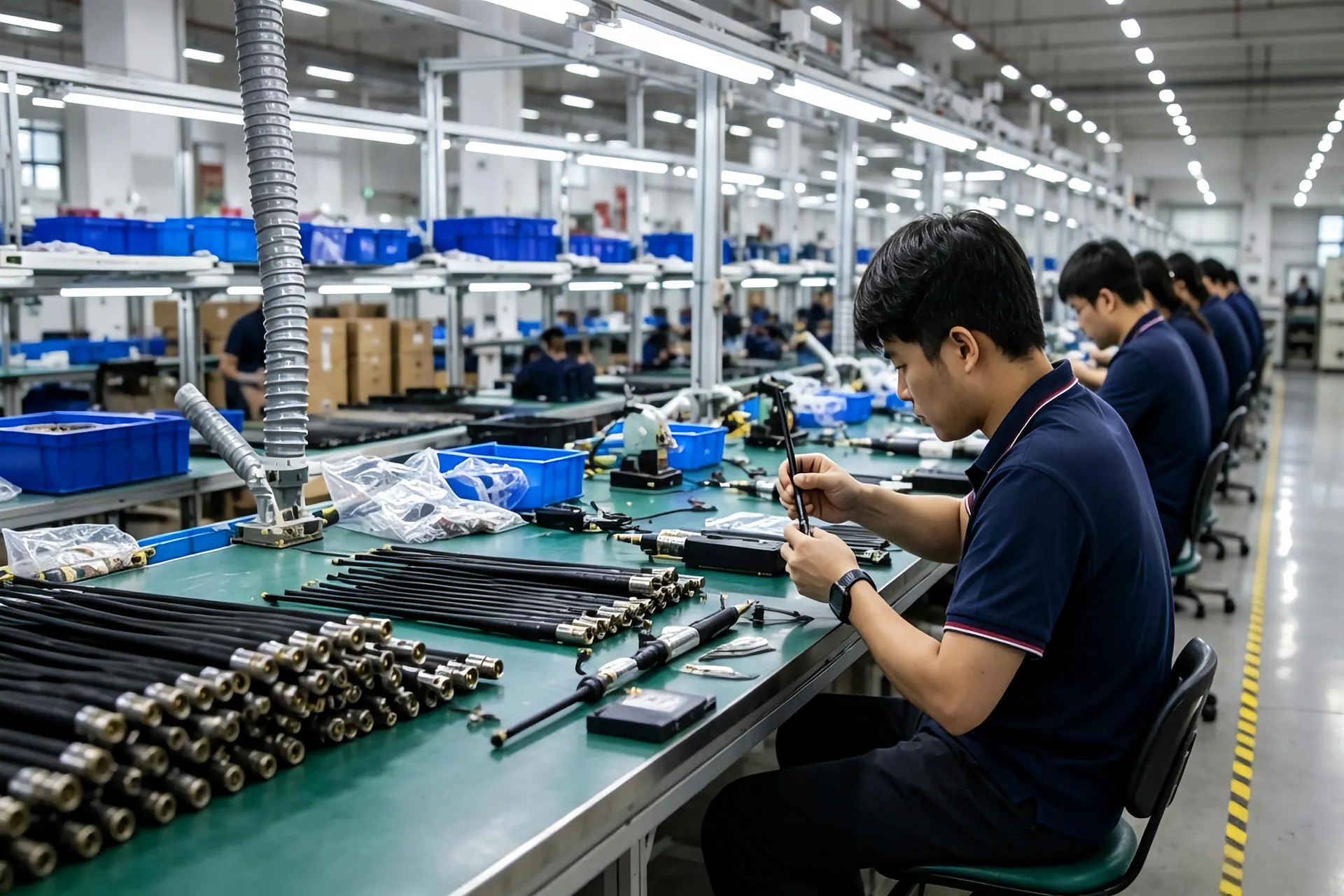
Depending on the product structure, assembly may include installing the antenna element, connecting the coaxial cable, assembling the RF connector, installing the housing and completing the final mechanical structure.
Different antenna types require different production methods. A rubber whip antenna, for example, has a different internal structure from a fiberglass antenna or a PCB antenna. A directional panel antenna also requires a different assembly process from a small internal antenna used in wireless equipment.
During assembly, production personnel follow the relevant product specifications and check important details such as cable routing, connector installation, component position and mechanical assembly.
For RF cable assemblies, the connection between the cable and connector is particularly important. Poor termination or incorrect assembly can affect the electrical performance of the cable and antenna system. Therefore, the assembly process needs to be controlled carefully.
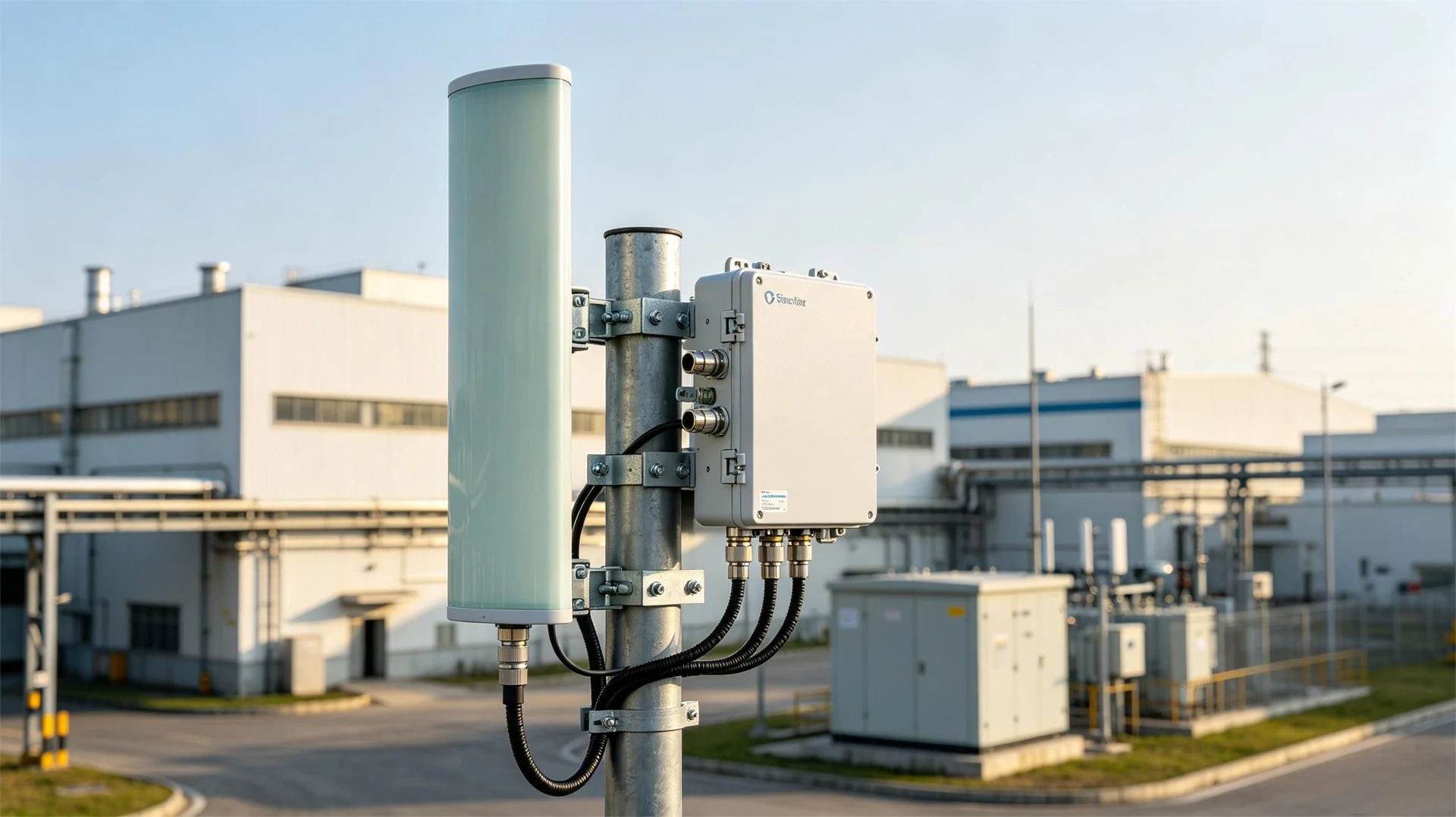
For outdoor antennas, the mechanical structure is also an important consideration. Fiberglass antennas and other outdoor antenna products may be exposed to rain, sunlight, temperature changes and other environmental conditions during use. Housing construction, sealing and connector protection therefore need to be considered during production.
RF Performance Testing
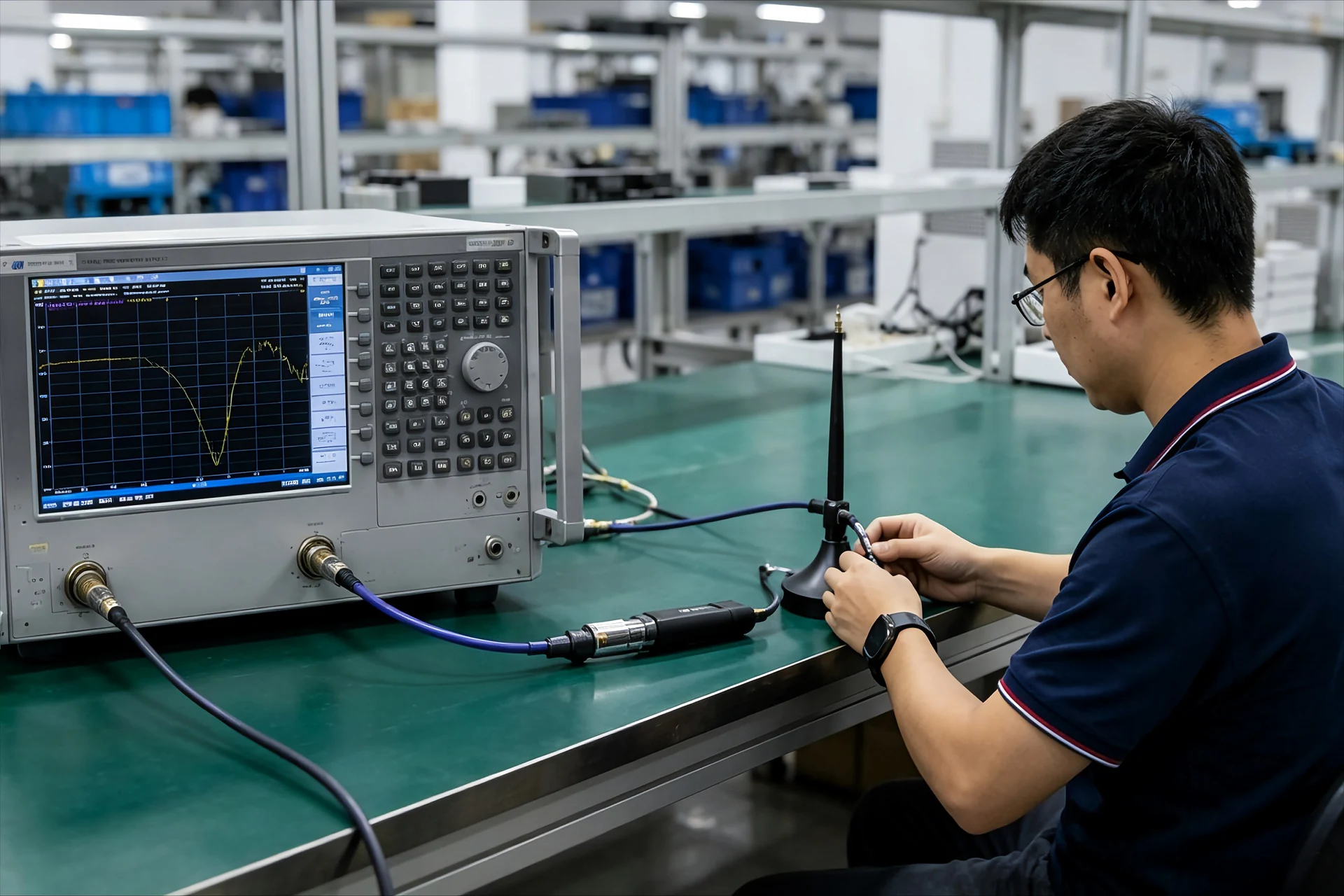
Visual inspection alone cannot determine the performance of an RF antenna. Electrical testing is an important part of antenna quality control.
Depending on the product design and customer requirements, KEESUN performs relevant RF tests on finished antennas. Common parameters include operating frequency, VSWR, gain and impedance.
VSWR, or Voltage Standing Wave Ratio, is commonly used to evaluate the matching condition between an antenna and the connected RF system. The required VSWR range depends on the antenna design and operating frequency.
Antenna gain is another important specification. Gain can vary according to the antenna structure, frequency range and design. Testing helps confirm that the manufactured product is within the required specification.
Frequency coverage is also checked according to the intended application. KEESUN produces antennas for different wireless communication systems, including WiFi, Bluetooth, LoRa, 4G, 5G, GPS, GNSS and FPV applications.
The specific testing method depends on the product. Some antennas require testing across a wider frequency range, while other products are designed for a specific frequency band.
RF testing provides production data that can be used together with mechanical and visual inspection to evaluate the finished product.
Quality Inspection During Mass Production
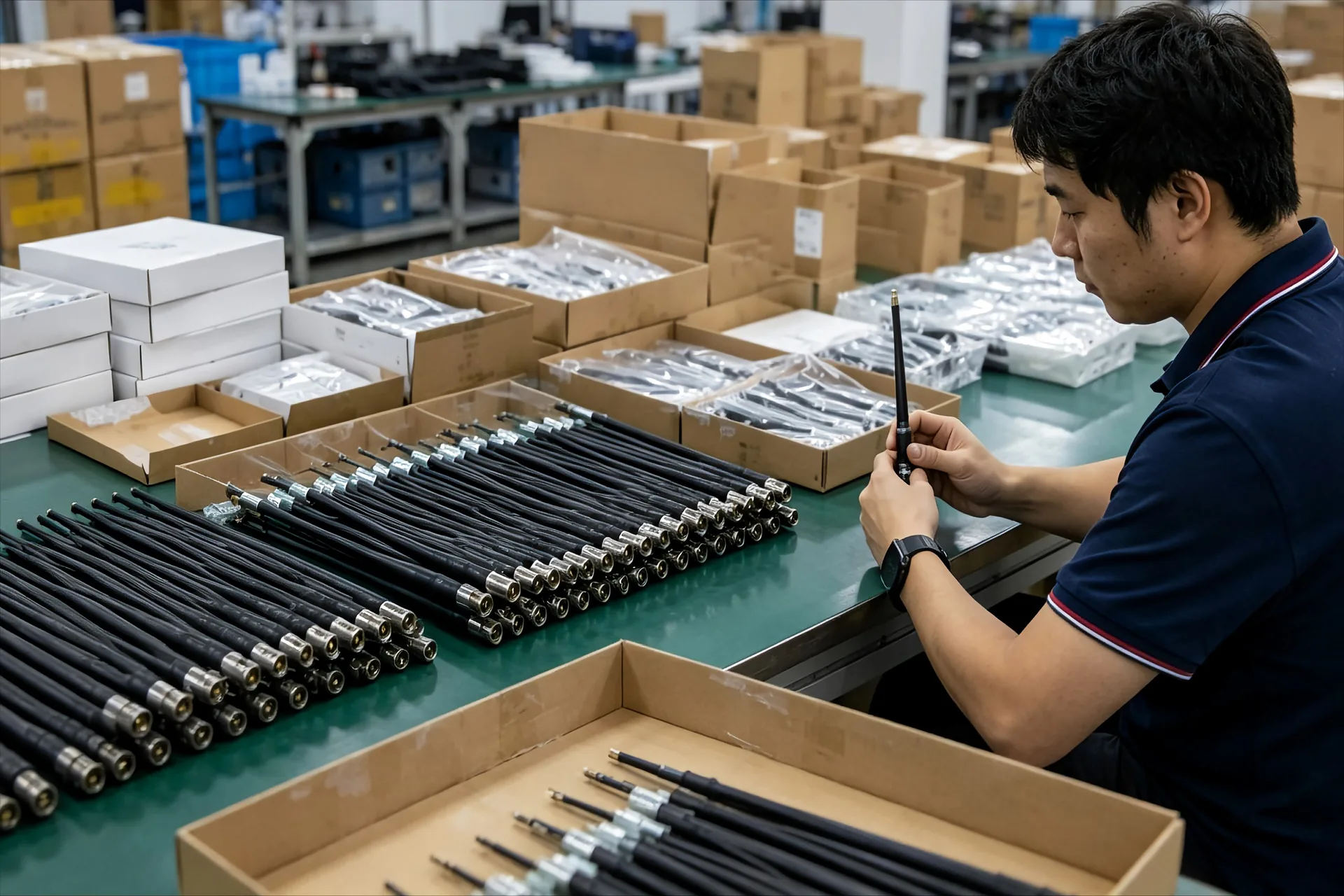
Maintaining consistency becomes especially important when producing antennas in large quantities.
A customer ordering hundreds or thousands of antennas normally expects the products to have consistent dimensions, connector configurations and RF performance. Small differences in assembly can become more noticeable when production volumes increase.
For this reason, production inspection is carried out throughout the manufacturing process rather than relying only on a final inspection.
Production personnel can check the appearance and assembly condition of products at different stages. Depending on the product, this may include checking the antenna body, connector position, cable length, housing, soldering or other assembly details.
For customized products, inspection requirements are based on the confirmed specifications. For example, a customer may require a specific antenna length, SMA connector, N-type connector, cable length, operating frequency or VSWR requirement.
These specifications need to remain consistent from sample production to mass production.
Clear production information also helps reduce misunderstandings between product development, production and quality inspection teams.
Inspection of Finished Antennas
After assembly and RF testing, finished antennas are inspected before packaging.
Finished product inspection may include appearance, dimensions, connector condition, cable assembly, product labeling and other requirements specified for the order.
The purpose of finished product inspection is to identify potential problems before the products leave the factory.
For standard antenna products, the inspection process follows the established product specifications. For OEM and ODM projects, additional inspection requirements may be added based on the customer’s drawings, samples or technical documentation.
Customized antennas often have specific requirements that differ from standard products. These may include connector type, cable length, mounting method, housing size, frequency range, gain or other mechanical and electrical parameters.
Keeping these requirements clear during production helps the factory maintain consistency between approved samples and subsequent production batches.
Attention to Outdoor Antenna Quality
Outdoor antennas require additional attention to mechanical construction.
Fiberglass antennas, outdoor omnidirectional antennas and other externally mounted antenna products may be installed on buildings, poles, communication equipment or other outdoor structures. These products need to maintain their mechanical integrity under normal outdoor conditions.
The antenna housing, sealing structure, cable connection and connector area are therefore important parts of the production and inspection process.
The exact requirements depend on the antenna design and application. For waterproof or weather-resistant products, the structure is designed according to the intended environment and customer requirements.
Production inspection helps ensure that the finished antenna follows the approved construction and assembly method.
Packaging and Pre-Shipment Inspection
Packaging is the final stage before products are shipped to customers.
Different antenna products require different packaging methods. Long fiberglass antennas need suitable protection during transportation, while small RF antennas and cable assemblies require packaging that prevents damage to connectors and cables.
Before shipment, products are checked according to the order requirements. Quantity, product model, connector configuration, labeling and packaging are confirmed before the goods leave the factory.
For B2B orders, correct product identification is particularly important because customers may purchase several antenna models or different connector configurations in the same order.
A clear packaging and inspection process helps reduce errors during delivery and makes it easier for customers to receive and organize their products.
Supporting Standard and Customized Antenna Production
KEESUN provides both standard antenna products and customized manufacturing services.
Standard products are manufactured according to established specifications and are suitable for common wireless communication applications. Customized products can be developed according to customer requirements, including antenna dimensions, frequency bands, gain, connector type, cable length and housing design.
OEM and ODM projects may involve several stages, including technical communication, sample development, testing, sample approval and mass production.
During this process, production and quality control requirements need to remain consistent. The approved sample provides an important reference for subsequent production.
For customers purchasing RF antennas in volume, stable production and consistent quality are often as important as the initial product specification. KEESUN therefore continues to improve its manufacturing processes to support different order quantities and product requirements.
Continuous Improvement in Manufacturing
Manufacturing quality is not determined by a single test or one production stage. It is the result of multiple processes working together.
From material inspection and component preparation to antenna assembly, RF testing, finished product inspection and packaging, each stage contributes to the final product.
KEESUN continues to review its production procedures and quality inspection methods based on actual manufacturing experience and customer requirements. When production issues are identified, the relevant process can be reviewed and adjusted to reduce the possibility of similar problems in future production.
This approach is particularly important for customized RF products, where each project may have different mechanical and electrical requirements.
As an antenna manufacturer, KEESUN will continue to focus on practical manufacturing, product testing and quality control. The company provides RF antenna products and related components for wireless communication, IoT devices, 4G and 5G equipment, GPS and GNSS systems, drones, FPV equipment, industrial communication systems and other RF applications.
By maintaining clear production procedures and inspection standards, KEESUN aims to provide customers with consistent products and reliable manufacturing support for both standard antenna orders and customized OEM/ODM projects.