

From More Antennas to Smarter Antennas: The Future of Massive MIMO
-
admin
- 29th September 2026
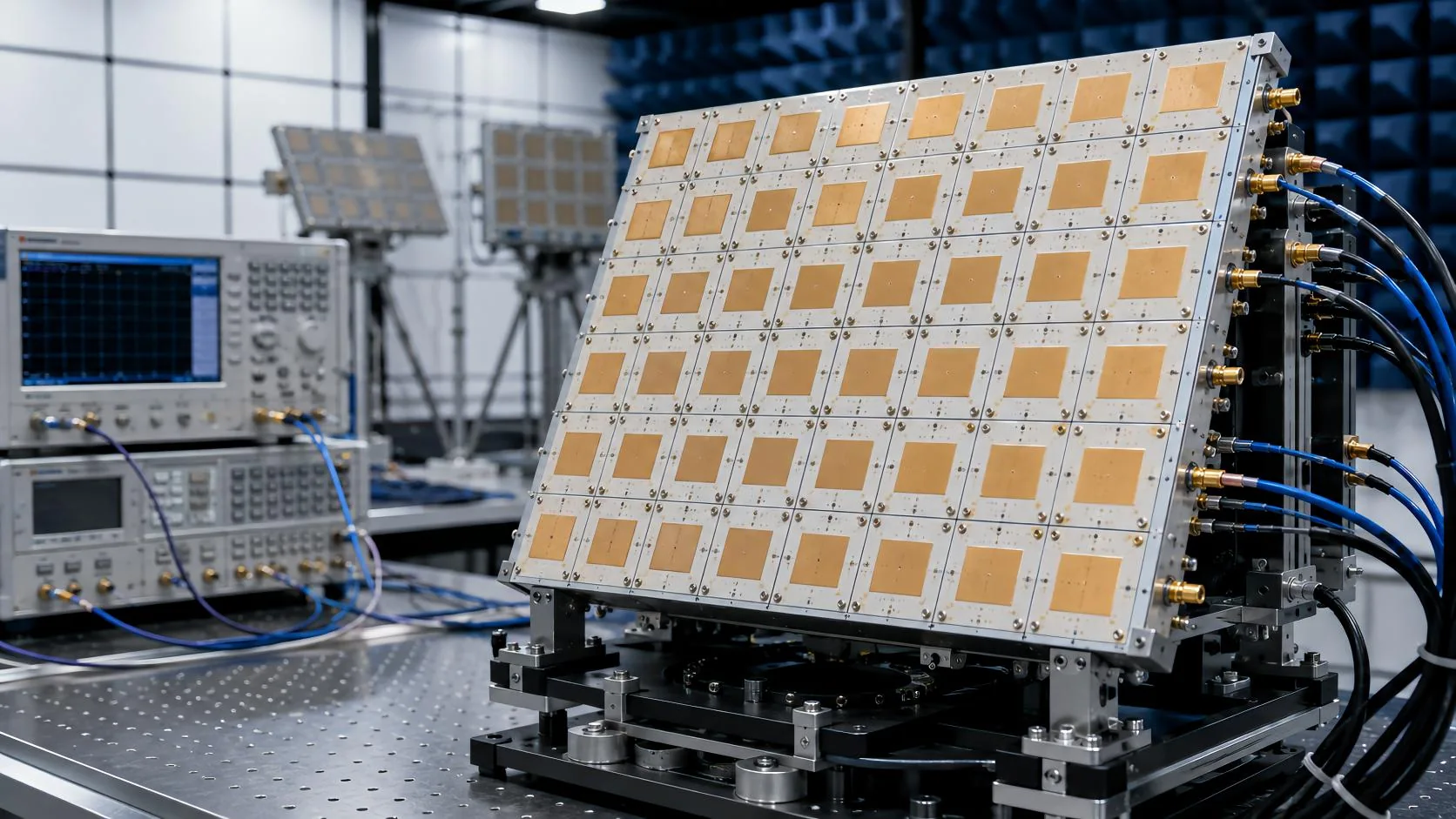
Massive MIMO has become one of the most important antenna technologies in modern cellular networks. Since its wider adoption with 5G, large antenna arrays have helped network operators improve capacity, coverage, spectral efficiency and user experience.
However, the development of Massive MIMO is no longer simply about adding more antenna elements.
As 5G networks move toward 5G-Advanced and research continues toward 6G, antenna systems are becoming more complex. Higher antenna density, wider frequency ranges, better beam control, lower power consumption and more efficient hardware are becoming important considerations in new antenna system designs.
This shift is leading the industry from more antennas to smarter antennas.
For antenna manufacturers and wireless equipment companies, the change also brings new requirements for antenna structure, RF performance, manufacturing accuracy and testing.
Massive MIMO Has Changed the Role of Antennas
Traditional cellular base stations often relied on a relatively small number of antenna elements. As wireless networks required higher capacity, MIMO technology introduced multiple antennas to improve spatial diversity and data transmission.
5G took this concept further with Massive MIMO.
By using larger antenna arrays, a base station can control signals in different spatial directions. Beamforming allows the system to concentrate radio energy toward users instead of transmitting the same signal broadly in every direction.
This provides several practical advantages.
A network can serve multiple users on the same time and frequency resources through spatial separation. The system can also adjust beams as users move, helping maintain more consistent wireless connections.
Qualcomm describes MIMO as a continuing foundation of cellular development, with 5G Massive MIMO already providing focused 3D beamforming, higher capacity and more uniform coverage. The company is now researching further MIMO development for 6G, including denser antenna arrays in the upper-mid-band spectrum.
The basic idea is relatively simple: antennas provide the physical interface between the radio system and the wireless environment.
But as the number of elements increases, antenna design becomes much more complicated.
Why Adding More Antennas Is Not Always the Answer
A larger antenna array can provide higher spatial resolution and additional beamforming capability, but increasing the number of elements also introduces new engineering problems.
More antenna elements require more physical space, RF connections, feeding networks and supporting structures. The system may also require additional RF chains and more complicated signal processing.
Power consumption is another concern.
Research published in 2026 on Massive MIMO energy efficiency shows that increasing antenna numbers can produce strong spectral-efficiency improvements at first, but the additional circuit power means that there is an optimum range rather than an unlimited benefit from simply adding antennas.
This is one reason the industry is looking beyond antenna quantity.
The next generation of antenna systems needs to make better use of each antenna element.
Instead of asking only how many antennas can fit into a panel, engineers increasingly need to consider questions such as:
- How should the antenna elements be arranged?
- How much isolation can be achieved between elements?
- How efficiently can the array form and steer beams?
- How can antenna performance remain stable across a wide bandwidth?
- How can power consumption be controlled?
- How can the antenna system fit into existing network sites?
These questions are becoming particularly important as wireless networks evolve.
5G-Advanced Is Increasing the Demand for Better Antenna Systems
5G deployment has already moved beyond the initial coverage phase in many markets. The focus is gradually expanding toward network capacity, uplink performance, energy efficiency and more efficient use of existing infrastructure.
A recent analysis from ABI Research points to capacity growth, uplink demand, energy costs and site limitations as important issues for operators preparing for 5G-Advanced. It also notes that antenna systems are being evaluated against a broader set of requirements rather than only traditional parameters such as gain, beamwidth and supported bands.
This matters for antenna manufacturers because network upgrades do not always mean replacing an entire site.
Operators may need antenna solutions that support multiple frequency bands, maintain suitable radiation characteristics and fit within existing mechanical constraints.
This creates demand for antennas that are not only electrically capable but also practical to manufacture and install.
For manufacturers, mechanical design and RF design therefore need to work together from the beginning.
Giga-MIMO and the Move Toward Denser Arrays
One of the developments attracting attention in the 6G research community is the continued scaling of MIMO toward much denser antenna arrays.
Qualcomm has described Giga-MIMO as an evolution of Massive MIMO for the upper-mid-band, particularly the 6–8 GHz range. At these frequencies, the shorter wavelength allows more antenna elements to be placed within a similar physical area.
This creates an interesting opportunity.
Higher frequencies generally experience greater propagation loss, but the shorter wavelength also makes it possible to increase antenna density. A larger number of elements can then be used to form narrower and more controlled beams.
Research published in 2026 has also examined the challenges of scaling 5G-style MIMO systems toward hundreds of antenna ports in the upper-mid-band. The work highlights issues including coverage, energy-efficient RF hardware, low-power array architectures and channel-state information.
In other words, future MIMO systems are not simply larger versions of today’s antennas.
They require different approaches to array design and system integration.
Antenna Element Design Becomes More Important
When an antenna array contains many elements, the performance of each individual element still matters.
Small changes in antenna dimensions, spacing, feeding structure or materials can affect the overall array.
Mutual coupling is one example.
When antenna elements are placed close together, electromagnetic interaction between neighboring elements can change impedance, radiation patterns and isolation. In a dense MIMO array, these effects can become more significant.
Researchers are therefore exploring different methods to improve isolation and maintain radiation performance in compact arrays.
A 2026 study on a 7–24 GHz MIMO antenna array, for example, investigated metasurface and decoupling structures to address mutual coupling and radiation-performance issues in dense 6G antenna systems.
This type of research shows why antenna engineering is moving toward a more integrated approach.
The antenna element, feeding network, PCB structure, mechanical housing and RF system can no longer always be considered as completely separate parts.
Beamforming Is Making Antennas More Adaptive
Another major change is the development of more adaptive beamforming.
In a conventional fixed antenna system, the radiation pattern is largely determined by the physical antenna structure. In a large MIMO array, the relative phase and amplitude of signals supplied to different elements can be controlled electronically.
This allows the system to create and steer beams according to the current communication environment.
For example, the system may need to direct energy toward a moving user, reduce interference from another direction or distribute resources among multiple users.
Research into AI-assisted beamforming is also expanding. A 2026 review of AI applications in antenna engineering covers machine learning and deep learning approaches for beam steering, antenna selection, array management and adaptive control in MIMO systems.
AI does not remove the need for good antenna hardware.
In fact, the opposite may be true.
More intelligent control systems depend on predictable antenna characteristics. If antenna performance changes significantly from one production unit to another, the control system has to deal with additional uncertainty.
This makes manufacturing consistency increasingly important.
Manufacturing Accuracy Matters in Large Antenna Arrays
For a single antenna, a small mechanical variation may have a limited effect.
For a large antenna array containing many elements, the situation can be different.
Element spacing, PCB dimensions, connector position, feeding structure and material properties all influence RF performance. Small variations can accumulate across an array and affect beamforming accuracy or array-level performance.
This is why production control is an important part of antenna development.
A professional antenna manufacturing process normally involves more than assembling the finished product. It can include material inspection, dimensional control, assembly inspection and RF testing.
Typical RF measurements may include:
- Frequency range
- VSWR
- Gain
- Impedance
- Radiation characteristics
- Isolation between antenna ports
- Polarization performance
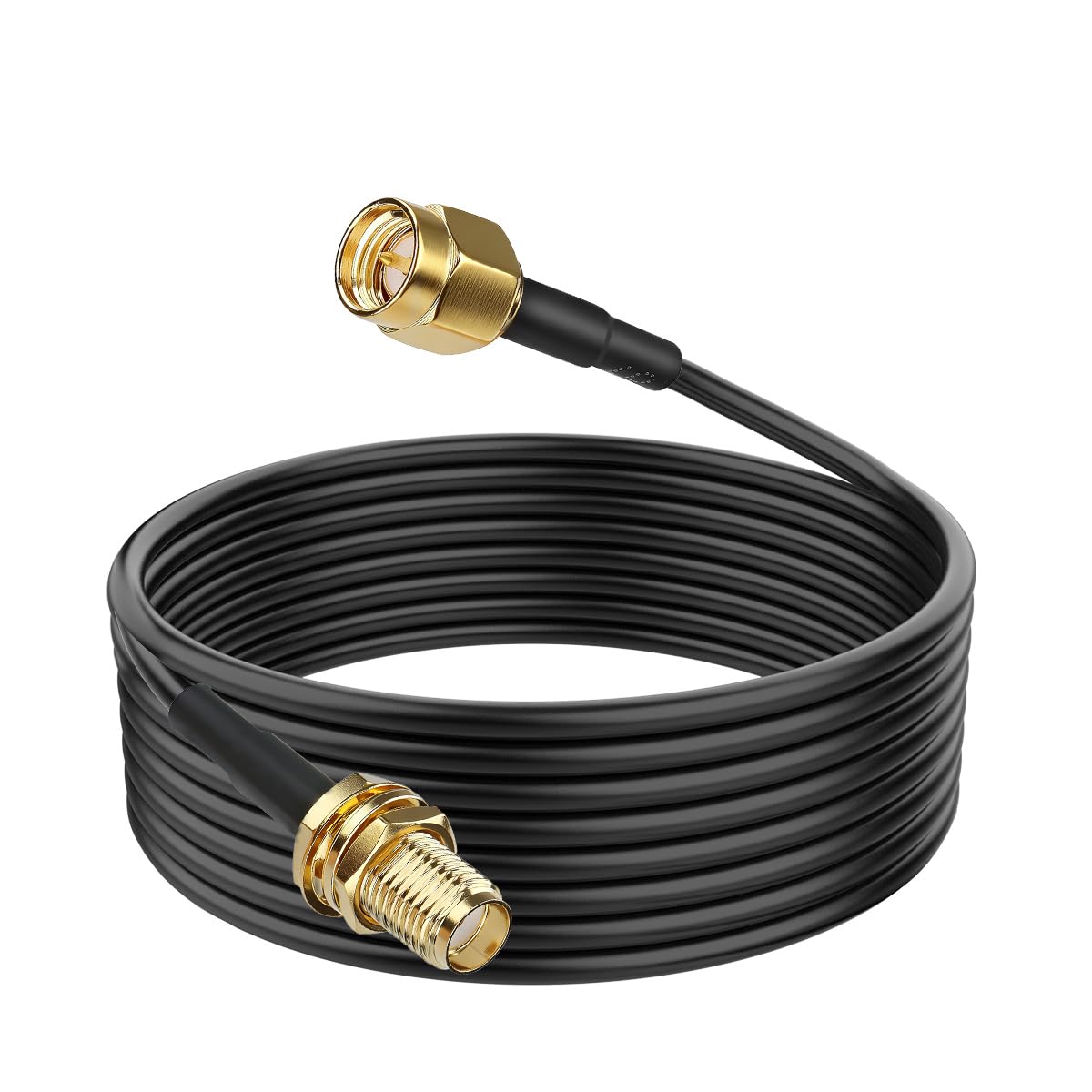
- Cable and connector performance
The exact testing requirements depend on the antenna type and application.
For MIMO antennas, multi-port measurements become particularly important because the performance of one antenna element cannot always be evaluated independently from the others.
From Prototype to Mass Production
Antenna development usually begins with a design requirement.
The customer may specify the operating frequency, available installation space, connector type, gain target, cable length, mounting method or environmental requirements.
The manufacturer then needs to convert those requirements into a practical product.
Prototype development allows engineers to evaluate the initial design. After testing and adjustment, the design must then be transferred into stable mass production.
This transition can be more difficult than producing a single prototype.
A prototype may perform well in a laboratory environment, but mass production introduces normal manufacturing variation. Materials, soldering, assembly position, cable routing and mechanical tolerances all need to be controlled.
For B2B antenna customers, this consistency is often just as important as the initial RF performance.
A product that performs well in one sample but varies significantly between production batches creates problems during equipment integration.
What Smarter MIMO Means for Antenna Manufacturers
The development of Massive MIMO and future large-scale arrays is changing the requirements placed on antenna suppliers.
Customers increasingly need manufacturers that can support more than a standard catalog product.
Depending on the application, an antenna supplier may need to work with customers on:
- Frequency and band selection
- Antenna size and structure
- Gain requirements
- Radiation pattern
- Connector selection
- Cable assembly
- Mounting method
- Waterproofing
- Material selection
- Prototype development
- RF testing
- Production scaling
This is particularly relevant for equipment manufacturers developing wireless products for industrial, IoT, transportation, telecommunications and other applications.
A customized antenna does not necessarily mean creating an entirely new antenna from zero.
In many projects, the manufacturer can start from an existing antenna structure and adjust the frequency, connector, cable, dimensions or installation method according to the equipment requirements.
This approach can reduce development time while still providing a product that fits the customer’s hardware.
The Role of a Professional Antenna Manufacturer
As MIMO systems become more complex, the relationship between wireless equipment companies and antenna manufacturers is also changing.
The antenna is often one of the first RF components that needs to be considered during product development because its physical size, installation position and electrical characteristics can influence the rest of the equipment design.
For this reason, early communication between the equipment designer and antenna manufacturer can make the development process more efficient.
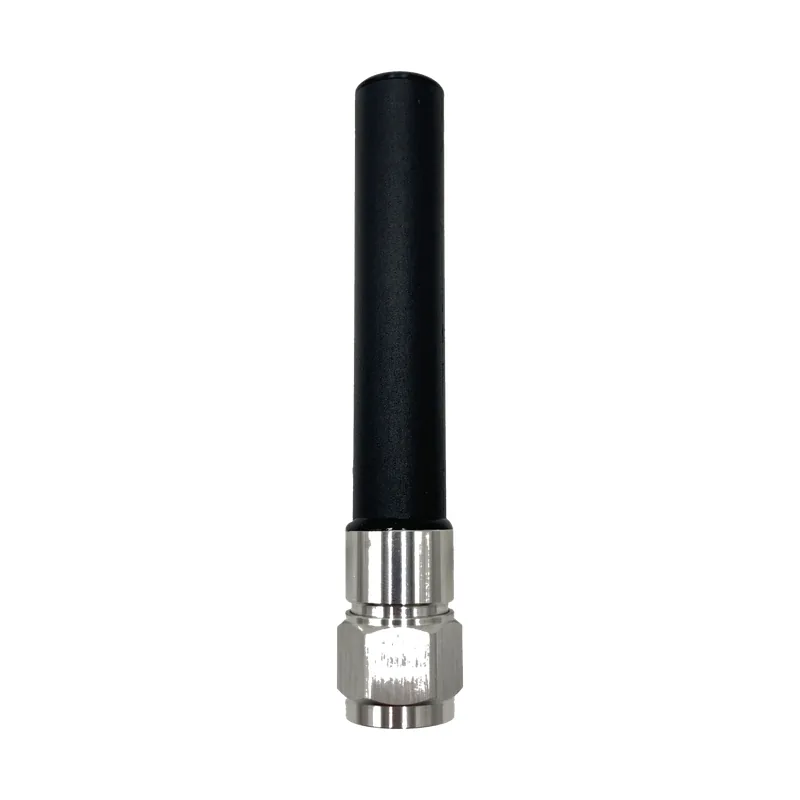
KEESUN focuses on RF antenna manufacturing and customized antenna solutions for different wireless applications. Its product range covers omnidirectional antennas, directional antennas, fiberglass antennas, rubber whip antennas, panel antennas, GPS/GNSS antennas, FPV antennas, PCB antennas, LoRa antennas and CPE antennas, as well as RF cables and connectors.
For projects that require customized antenna structures, frequency bands, connectors, cable assemblies or installation methods, KEESUN can work with customers from product requirements through prototype development and production.
The goal is not simply to produce an antenna with a specified frequency.
The antenna needs to work as part of the customer’s equipment.
Looking Beyond Massive MIMO
Massive MIMO will continue to play an important role in the development of wireless networks, but its future is likely to involve more than simply increasing the number of antenna elements.
The industry is moving toward denser arrays, more efficient beamforming, improved energy management, wider frequency coverage and greater integration between antennas, RF electronics and software.
Research into 6G is already exploring extremely large-scale antenna arrays, near-field communication, beam focusing and new array structures.
At the same time, commercial 5G and 5G-Advanced networks still require practical antenna solutions that can be manufactured reliably and deployed within existing infrastructure.
This creates two parallel directions for the antenna industry.
One is the continued improvement of current 4G and 5G antenna products.
The other is the development of new antenna architectures for future wireless systems.
For antenna manufacturers, both directions require the same basic foundation: reliable RF design, consistent manufacturing, accurate testing and the ability to adapt products to real equipment requirements.
Conclusion
Massive MIMO has already changed the way modern cellular networks use antennas.
The next stage is not simply about putting more antenna elements into a panel. It is about using antenna arrays more efficiently and making them easier to control, manufacture and integrate.
5G-Advanced is increasing the need for better capacity, uplink performance and energy efficiency, while 6G research is pushing MIMO toward denser arrays and new frequency ranges.
As these technologies develop, antenna performance and manufacturing quality will remain closely connected.
For equipment manufacturers, selecting the right antenna partner can therefore be an important part of the product development process.
KEESUN continues to provide standard and customized RF antenna solutions for wireless communication and connected equipment. By combining antenna design, RF testing, cable and connector integration, and production capabilities, KEESUN supports customers looking for practical antenna solutions for current wireless products and future communication applications.