

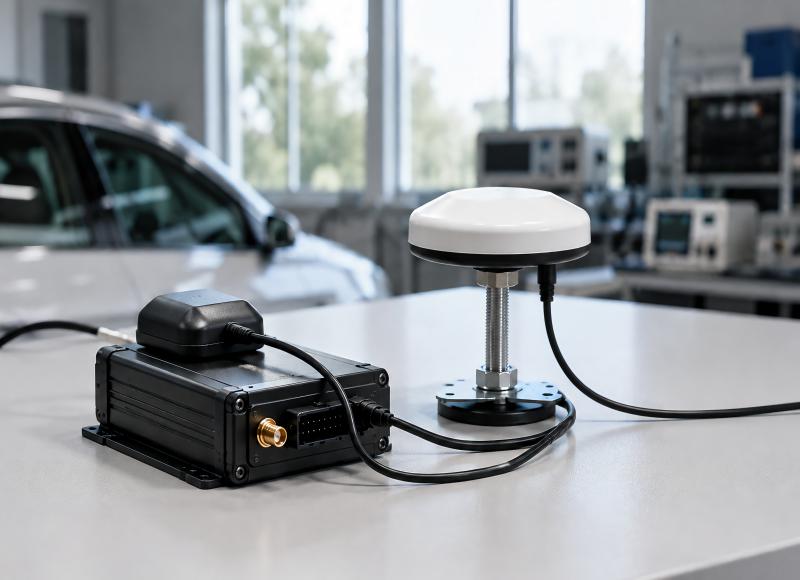
GPS and GNSS Antenna Solutions for Positioning and Navigation
GPS and GNSS antennas are used to receive satellite positioning signals for navigation, tracking, positioning, timing, and location-based applications. The antenna is an important component of a GNSS receiver because it determines how effectively satellite signals can be received by the system.
KEESUN provides GPS and GNSS antenna solutions for vehicle tracking, navigation equipment, IoT devices, surveying equipment, drones, industrial systems, and other positioning applications.
GPS and GNSS Frequency Requirements
Different satellite navigation systems use different frequency bands. GPS, BeiDou, Galileo, GLONASS, and other GNSS systems may use different signal frequencies, while some modern positioning equipment supports multiple bands.
The antenna should therefore be selected according to the GNSS signals supported by the receiver.
Single-band antennas can be suitable for applications with basic positioning requirements, while multi-band GNSS antennas can be used for equipment that requires reception of multiple satellite signals.
Active and Passive GNSS Antennas
GPS and GNSS antennas can generally be divided into passive and active types.
A passive antenna does not include an integrated low-noise amplifier and is normally used when the receiver has a suitable RF front end and the cable length is relatively short.
An active GNSS antenna includes an LNA to amplify the received satellite signal. This type can be useful when the antenna is installed some distance away from the GNSS receiver or when additional signal compensation is required.
The appropriate antenna type depends on the receiver design, cable length, power supply, and application environment.
Antenna Installation and Signal Reception
GNSS signals received from satellites are relatively weak, so antenna installation is an important part of system design.
For vehicle tracking equipment, the antenna is often installed on the roof or another position with a relatively open view of the sky. For industrial equipment, the antenna position needs to be considered together with the enclosure, metal components, and surrounding electronics.
Objects close to the antenna can influence signal reception. Proper antenna placement can help reduce unnecessary interference and improve the stability of the positioning system.
Compact GNSS Antennas for Embedded Equipment
Modern positioning equipment often requires a small antenna that can be installed inside a compact housing. In these applications, antenna dimensions and RF performance need to be balanced with the available installation space.
KEESUN provides different GNSS antenna structures for embedded devices and external installation. Connector and cable options can also be selected according to the receiver interface and mechanical requirements.
For customized projects, the antenna can be developed around the equipment structure and GNSS module requirements.
GNSS Antennas for Different Applications
GPS and GNSS antennas are commonly used in:
Vehicle tracking systems
Fleet management equipment
GPS navigation devices
Asset tracking systems
Drones and UAVs
IoT positioning equipment
Smart transportation systems
Industrial positioning systems
Surveying equipment
Timing and synchronization systems
Customized GPS & GNSS Antenna Solutions
A GNSS antenna needs to match the receiver and the final equipment structure. Frequency coverage, antenna gain, LNA characteristics, connector type, cable length, housing size, and installation method are all factors that should be considered during antenna selection.
KEESUN can provide standard GPS and GNSS antennas as well as customized antenna assemblies for OEM and ODM applications. Customers can provide the GNSS module, required satellite systems, frequency bands, mechanical dimensions, and connector requirements.
Based on these requirements, KEESUN can recommend an appropriate antenna configuration for the project.
KEESUN GPS & GNSS Antenna Solution
KEESUN focuses on RF antennas and related cable assemblies for wireless communication and positioning equipment. Our GPS and GNSS antenna solutions are designed for practical integration into different types of devices, from compact tracking terminals to outdoor positioning equipment.
For a new GNSS project, providing the receiver model, frequency requirements, installation location, connector type, and cable length can help determine the most suitable antenna solution.